

Experience the Sacred Rituals of Kumbh
The Kumbh Mela is one of India's most extraordinary spiritual gatherings, bringing together millions of pilgrims, sadhus, saints, ascetics, yogis, spiritual teachers and visitors from across India and around the world. At the heart of the Kumbh Mela are ancient rituals and traditions passed down through generations.
The Holy Snan, or ritual bathing, is the central ritual of the Kumbh Mela. Pilgrims gather at the sacred riverbanks and immerse themselves in the holy waters with prayers and devotion.
At Prayagraj, the sacred bathing takes place at the Triveni Sangam, the confluence traditionally associated with three sacred rivers:
Devotees believe that bathing during auspicious periods of the Kumbh has profound spiritual significance and can help purify the soul, release accumulated karmic burdens, and support the journey towards moksha – spiritual liberation.
The ritual commonly involves entering the sacred waters, taking a dip, offering prayers, and making offerings to the Sun. For pilgrims, it is not simply a bath—it is a deeply personal act of faith, surrender and spiritual renewal.
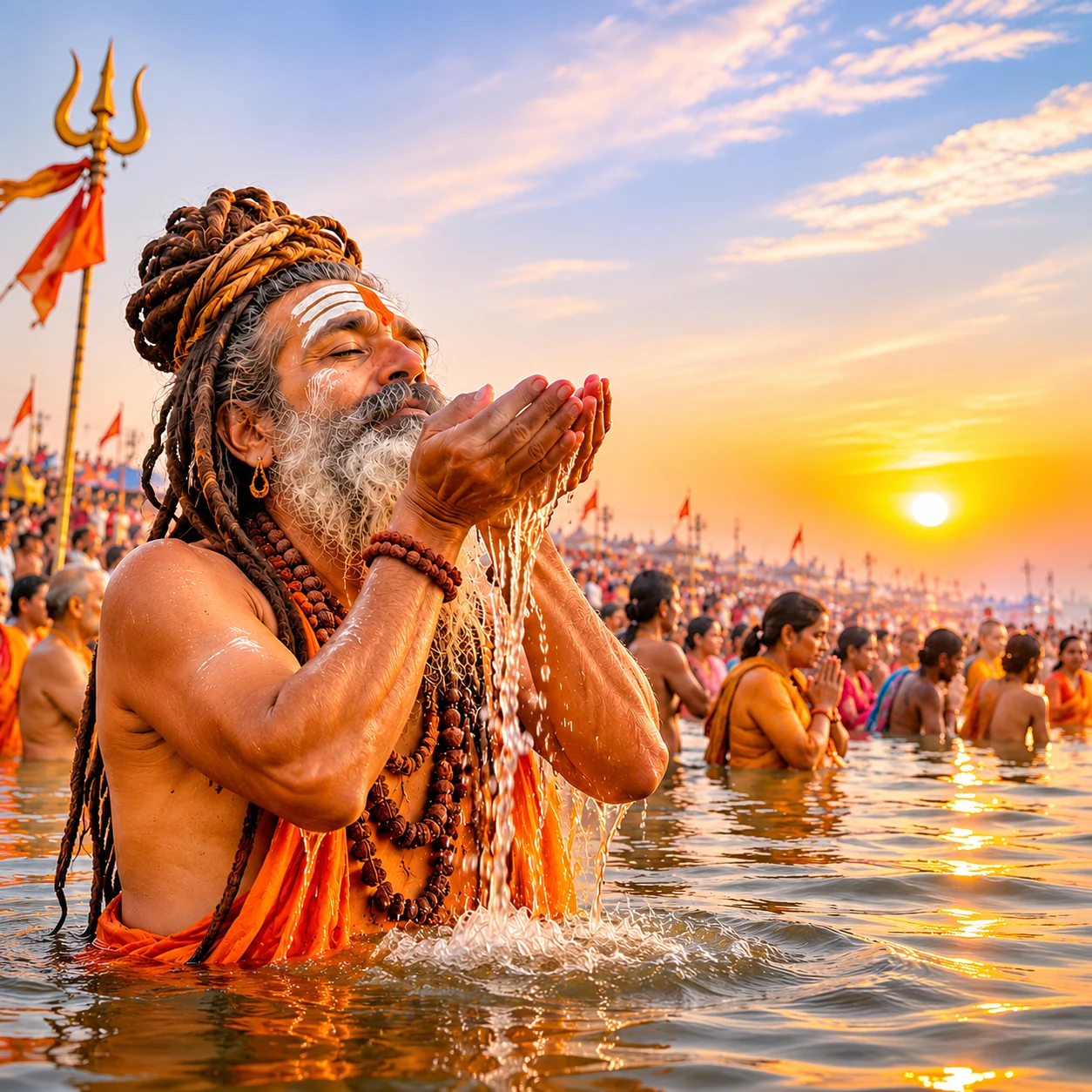
The Kumbh Mela calendar includes specially designated auspicious bathing days, determined according to traditional Hindu astrological calculations. These days attract exceptionally large numbers of pilgrims seeking divine blessings.
Among the most significant occasions are the major Amrit Snan days, traditionally associated with the ceremonial bathing of the Akharas and Naga Sadhus. Pilgrims may also take part in sacred bathing throughout the Kumbh period, even when a particular day is not designated as a major bathing occasion.
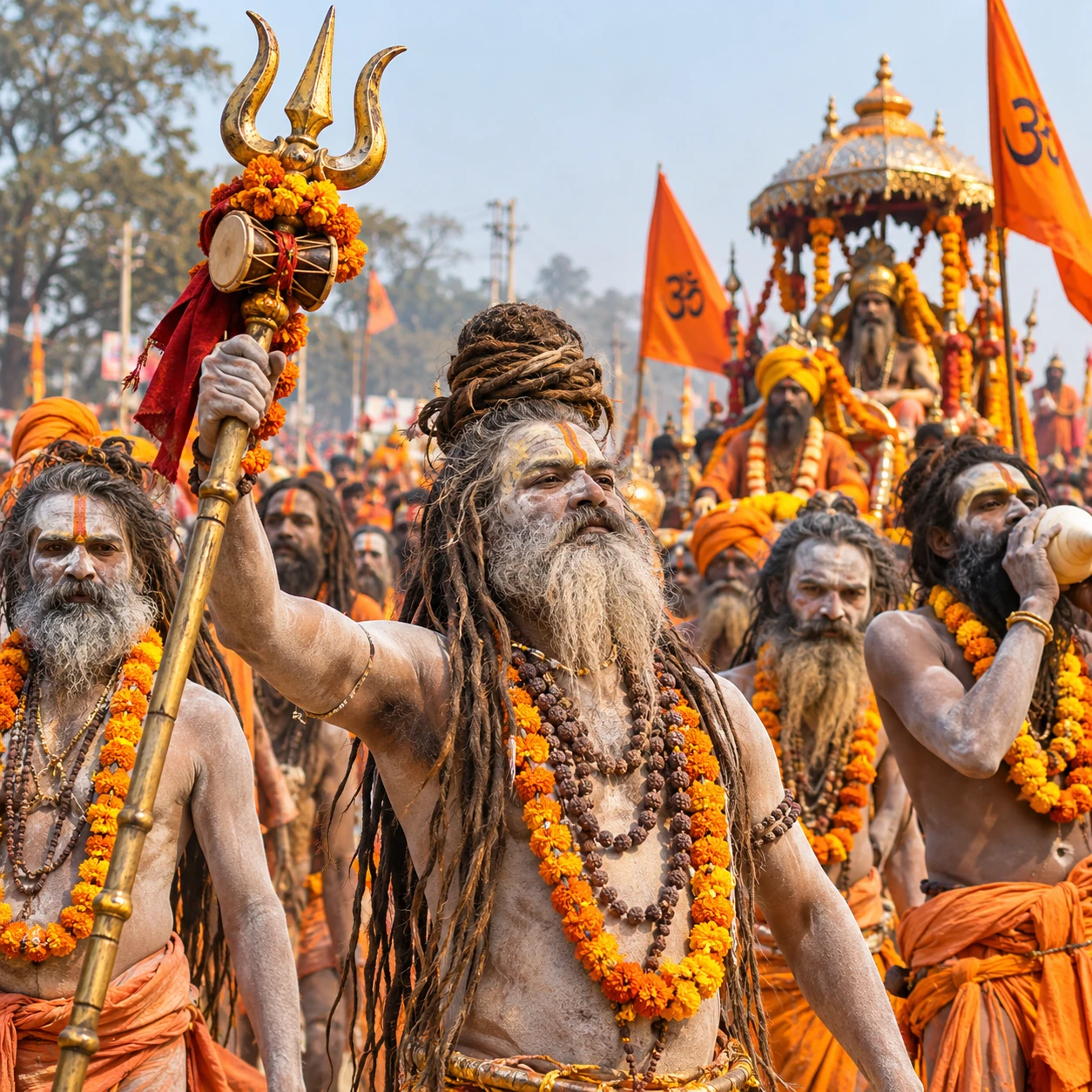
One of the most fascinating aspects of the Kumbh Mela is the presence of the Akharas, traditional religious orders with long-established spiritual and ascetic traditions. The Akharas play an important role in the religious life of the Kumbh.
Among the most recognizable participants are the Naga Sadhus, ascetic practitioners known for their distinctive spiritual traditions and renunciation. During major bathing occasions, processions of Akharas and Naga Sadhus move towards the sacred river in a highly ceremonial atmosphere.
The Kumbh Mela provides pilgrims with opportunities for darshan—the sacred experience of seeing and receiving blessings from spiritual teachers, saints and sadhus.
Visitors may attend spiritual camps, listen to discourses, participate in devotional gatherings, and meet practitioners from different religious traditions. For many pilgrims, listening to the teachings of spiritual masters is an essential part of the Kumbh experience.
Satsang, meaning association with truth and spiritual company, is an important part of the Kumbh Mela. Throughout the festival, spiritual teachers, saints and religious scholars conduct:
Seva, or selfless service, is another important dimension of the Kumbh Mela. Devotees and religious organizations arrange food and other forms of assistance for sadhus, pilgrims and visitors.
Community kitchens, known as Bhandaras, serve meals to large numbers of people and reflect the traditions of generosity, hospitality and service associated with Indian spiritual culture.
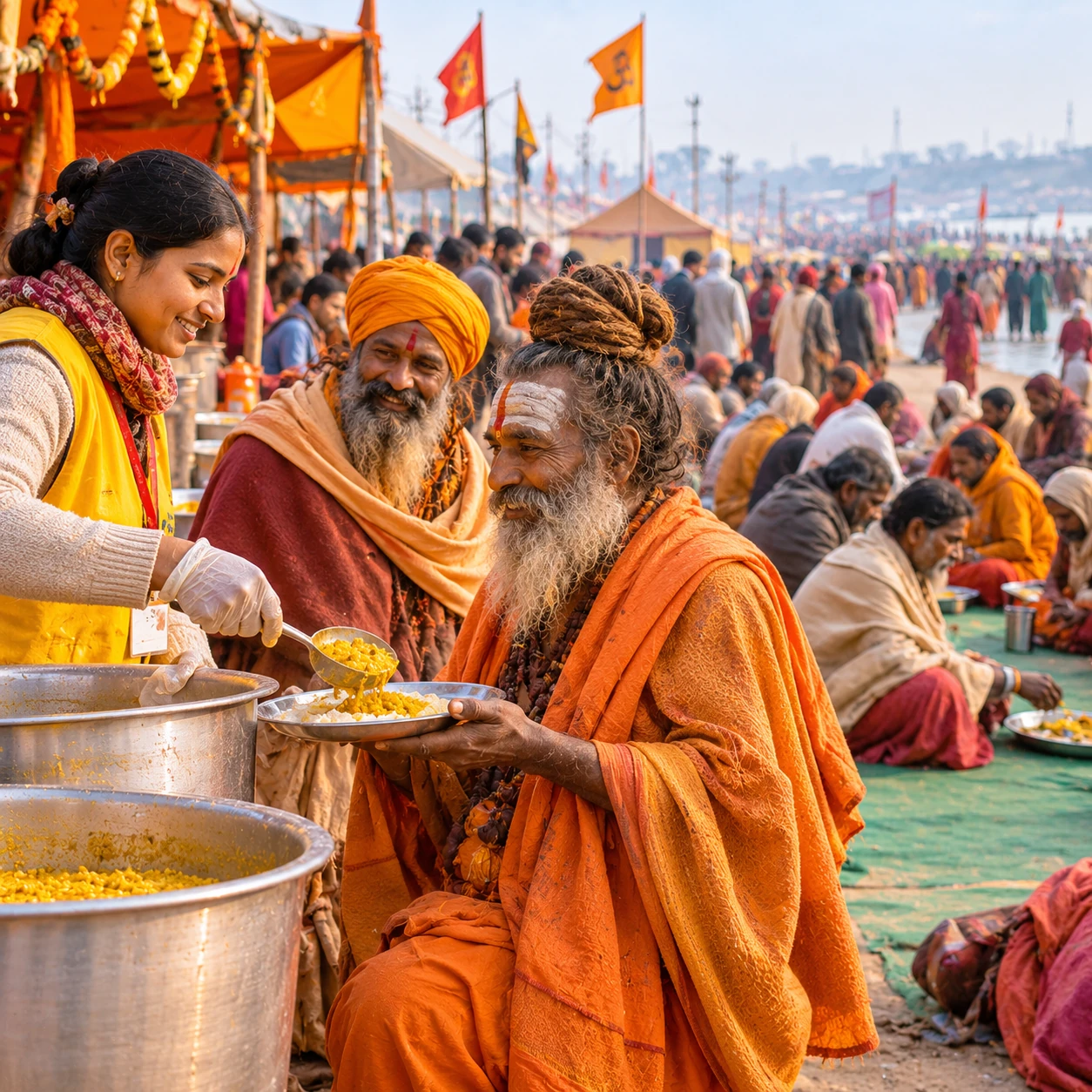
During the Kumbh Mela, a vast temporary city emerges around the pilgrimage area. Millions of pilgrims stay in camps, ashrams, religious institutions and temporary accommodation facilities.
The camp environment becomes an important part of the Kumbh experience, with daily activities including prayer, meditation, satsang, religious discussions, devotional music and community meals.
The Kumbh Mela is renowned for its unique atmosphere combining devotion, culture, and human energy:
For millions of pilgrims, the Kumbh Mela is a journey of faith and spiritual renewal. The rituals of the Kumbh—including Holy Snan, Amrit Snan, darshan, satsang, prayer, meditation, seva and spiritual discourses—connect contemporary pilgrims with India's ancient spiritual traditions.
Whether you come as a pilgrim, spiritual seeker, cultural traveller, photographer or first-time visitor, the Kumbh offers an extraordinary opportunity to witness one of India's most important living traditions.
Kumbh Camp Aum offers pilgrims and travellers a comfortable base from which to experience the Kumbh Mela. We assist with accommodation, transportation, pilgrimage programmes, local experiences and customized Kumbh itineraries.
Designed with comfort, security, and warm hospitality for multi-generational families visiting the sacred Kumbh.
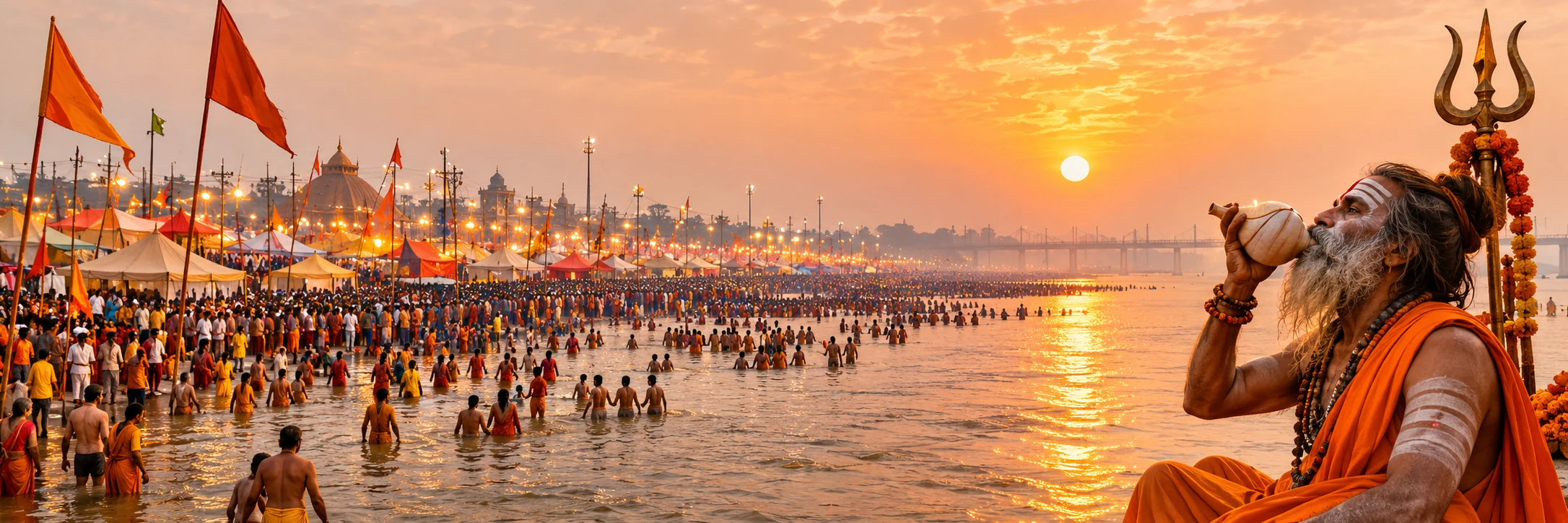
Dedicated focus on fulfilling your personal devotional goals and witnessing sacred river rituals comfortably.
Immerse in deep satsang, yoga, meditation, and interactions with spiritual teachers and saints.
Seamless organization, language support, and authentic cultural connection backed by Explore India Tours.
Tailored group tenting, dedicated coordination, and custom group pilgrimage itineraries.
Experience the visual grandeur, Akharas processions, soundscapes, and temporary city life.
Holy Snan • Amrit Snan • Akharas • Naga Sadhus • Satsang • Seva • Yoga • Meditation • Spiritual Experiences